
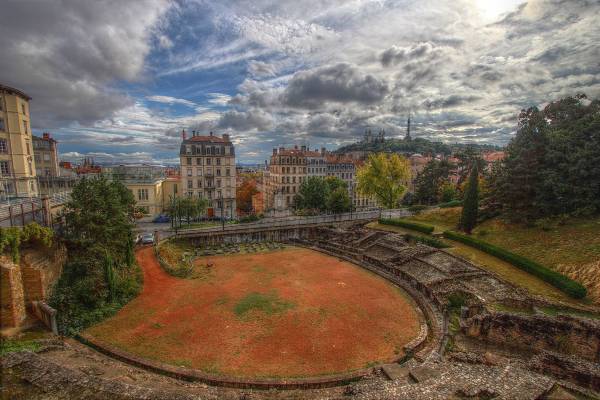
The Amphitheater of the Three Gauls, located in Lugdunum (Lyon), was part of the Sanctuary of the Three Gauls dedicated to the cult of Rome and Augustus, celebrated by the 60 Gallic tribes during their gatherings in Lugdunum. Classified as a historical monument in 1961, this amphitheater is an emblematic testament to the ancient history of the region.
An Imperial Shrine and Gathering Place
Built at the foot of the Croix-Rousse hill, at a time when the Rhône and Saône rivers converged, the amphitheater is intimately linked to the sanctuary of Rome and Augustus, as indicated by an inscription discovered in 1957. This connection made it possible to identify its origins and its importance within the imperial cult.

Evolution and Expansion
At the beginning of the 2nd century, the amphitheater was enlarged under the direction of C. Julius Celsus, procurator of Gallia Lugdunensis from 130 to 136. Two galleries were added around the old amphitheater, increasing its width from 25 meters to 105 meters and raising its capacity to approximately 20,000 seats. Although modest compared to the amphitheaters of Nîmes and Arles, this expansion allowed the venue to be opened to the entire population of Lugdunum and its surrounding area.

Historical Testimony and Memorable Visits
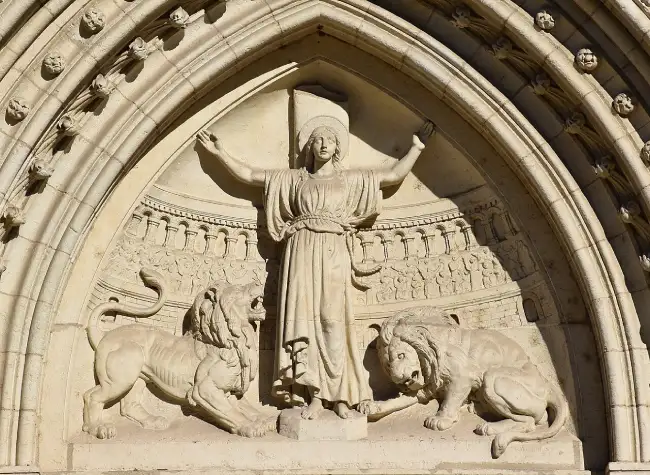
Historians identify this amphitheater as the site of the martyrdom of Saints Blandina and Pothinus during the persecution of 177. A pillar in the middle of the arena commemorates this event as well as the visit of Pope John Paul II to Lyon in 1986, marking the spiritual and historical importance of the site.
Source of the image
Discoveries and Restoration

Over the centuries, archaeological explorations have revealed the remains of the amphitheater. Extensive excavations, begun in 1956 and continued in subsequent years, led to the discovery of the remains visible today. Although partially destroyed by 19th-century urban expansion, the modest surviving vestiges have been incorporated into the Jardin des Plantes and are open to visitors.
A Historical Treasure to Discover
The Amphitheatre of the Three Gauls offers a fascinating glimpse into Lyon's Gallo-Roman past. Between imperial history, significant events, and archaeological discoveries, this iconic site invites you to explore the rich cultural heritage and ancient legacy of the Lyon region.
See our audio guided tour on this vestige.


