
Summary
Gastronomic and Lively Epicenter of Lyon
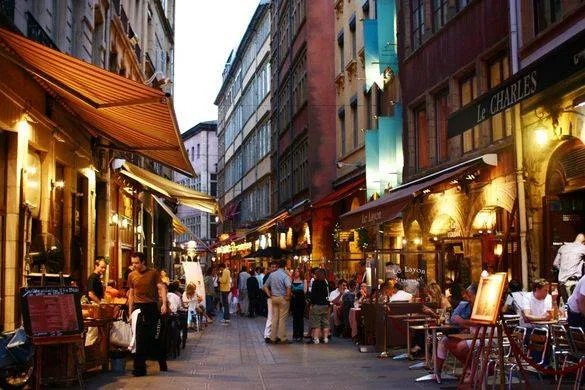
Rue Mercière, in the heart of Lyon's Presqu'île district, is an iconic thoroughfare renowned for its liveliness, friendliness and diverse gastronomic scene. This historic street, lined with restaurants, bars and shops, embodies the city's culinary richness and nightlife.
The Historical Spine

- Historically, Mercière Street was themain artery of the Peninsula from the Middle Ages until the 18th century.
-
She was part of a major traffic artery which crossed the city from north to south, connecting the Rhône bridge (eastward) to Saône bridge (westward), although this axis was composed of several sections bearing different names: Bourchamin streets, Comfort And Mercière.
-
The southern part of the current Rue Mercière was formerly called Comfort Street (visible on the scenographic plan of 1550).
-
Another section joining the bridge over the Rhône was called Serpillère Street (now defunct or integrated).
-
Merchants' Street

- The name "Merciere" derives from the word "Mercier" (formerly written Marchire Or Merchant), which referred to the merchants or the profession of haberdashery.
- Historically, Mercière Street was themain shopping street of the Presqu'île de Lyon, particularly during the Middle Ages and the Renaissance.
- This was the street where one could find a large number of stalls and shops selling various products: fabrics, sheets, parchments, furs, as well as haberdashery items in the strict sense (small objects, ribbons, needles, etc.).
She was, therefore, par excellence, the shopping street of the city, and it is this central role in commerce that gave it its name.
The Golden Age of Printing

In the 16th century, it was nicknamed the "Printing Street"Humanist figures such as Sébastien Gryphe They set up their workshops there, making Lyon the European capital of books. The intellectual ferment was such that it gave rise to the famous "Grand Tric" (1539-1542), considered by some to be the first workers' strike in France, when typographers demanded better working conditions.
A Neighborhood with a Shady Reputation
- Urban Decline: After the decline of the large printing houses in the 17th and 18th centuries, and with the rise of more prestigious districts like Les Brotteaux, Rue Mercière lost its splendor. Its buildings, poorly maintained and divided into small apartments, became a refuge for a vulnerable population.
- Hotels in Passes: The street and its immediate surroundings were famous for their many hotels for quick encounters and their brothels, taking advantage of the central location and its dense and discreet architecture (small courtyards, traboules). It was considered a "bad reputation" district in Lyon.
- The Years 1950-1970: This activity was still very present until the 1960s and 1970s, which largely contributed to the degraded and unsanitary image of the street at that time.
Renaissance and Rehabilitation

After a slow decline that made it dark and disreputable in the 19th century, the street's revival came from gastronomy and a major municipal decision. The opening of the Bistro in Lyon in 1974 was a sign of things to come, followed by the decision to pedestrianize it. The renovation project, including the laying of the famous cobblestones, has Completed in 1990This pedestrianization has allowed for the massive installation of terraces and has transformed the street into the gastronomic and convivial hub that we know today.
The best restaurants on the street
The street is renowned for its gastronomy. The bouchons lyonnais, traditional restaurants typical of the city, offer authentic and generous cuisine, showcasing local specialties such as quenelles, tablier de sapeur (breaded tripe), and grattons (pork cracklings). The charm of Rue Mercière lies in this unique concentration of establishments that celebrate the famous "Lyonnaise art of living."
Here is a list of iconic tables and their stories:
Le Mercière (56 Rue Mercière)

A pillar of traditional Lyonnaise cuisine, its address is strategic, next to the Passage des Imprimeurs, a tribute to the intellectual past of the street.
La Mère Maquerelle Bouchon Lyonnais (62 Rue Mercière)

Paying homage to the "Mères Lyonnaises", this authentic bouchon perpetuates the generous and convivial cuisine that once delighted merchants and silk weavers.
Le Bistrot de Lyon (64 Rue Mercière)

A founding institution. Its opening in 1974 is seen as the birth of the gastronomic rue Mercière, which revived the attractiveness of the entire district.
Le Layon (52 Rue Mercière)

This bistro with its old-fashioned charm is an ideal place for enjoying local produce. It occupies one of the facades that lined the shops of drapers and haberdashers in the Middle Ages.
Mother Cottivet (58 Rue Mercière)

Paying homage to great female cooks, it is located near one of the few Renaissance courtyards preserved in the street.
The Infidels (57 Rue Mercière)

An address praised for its finesse and quality, proof that the street knows how to embrace culinary modernity while respecting its architectural character.
Animated Terraces

Rue Mercière is also popular for its lively terraces. The cafés and bars offer welcoming outdoor spaces, perfect for enjoying the dynamism of the street while enjoying a drink or a meal outdoors.
Tourist Destination

Rue Mercière, thanks to its atmosphere, gastronomy and attractiveness, is also a popular tourist destination.
1. Architecture: Observing the "Stratification of Time"
The architecture of Rue Mercière is a rare example of historical stratification, where we observe the transition between the medieval style and the opulence of the Renaissance.

➡️ The dominant style: The opulence of the Early Renaissance
- Facades and Materials: Admire the buildings constructed from dressed limestone (often golden in color), offering a striking contrast with the narrowness of the street.
- Italian Ornaments: Look for traces of the Renaissance, imported by Italian merchants: windows decorated with medallions, of garlands, and some mascarons carved above the doors (decorative faces).
- Private Mansions: These buildings, often tall and narrow, were the residences of the wealthiest families. Note the height of the carriage entrances and the size of the mezzanines, which once served as back rooms.
➡️ What Remains of the Middle Ages
- Tight Structure: The very narrow configuration of the street testifies to its medieval layout, predating the major thoroughfares of the 19th century.
- Discreet Timber Framing: Although stone replaced wood (following 18th-century fire regulations), you will sometimes see some vestiges of it in the courtyards. timber framingrecalling the original appearance of the city.
We cannot discuss the history of the Peninsula without paying tribute to Horace CardonAn embodiment of Lyon's prosperity at the crossroads of the Renaissance and the Classical era, this Piedmontese-born businessman was one of the greatest bankers, merchants, and booksellers-printers of his time. His financial and intellectual power was exerted in the immediate vicinity of Rue Mercière, where he financed the kings of France while publishing the works of the greatest minds.
2. The Secret of the Passages: The Street-Quay Axis
To understand the economy of Rue Mercière, one must look beyond the facades: it is the central artery of a secret network of passageways (traboules) which connected it directly to the Saône quayside.
Did you know? The main function of these passages was to allow merchants to quickly and discreetly transport their goods between their offices (on Mercière) and the boats (on the quay), avoiding the crowds.
➡️ The Printers' Passage (56 Rue Mercière – 26 Quai Saint-Antoine)
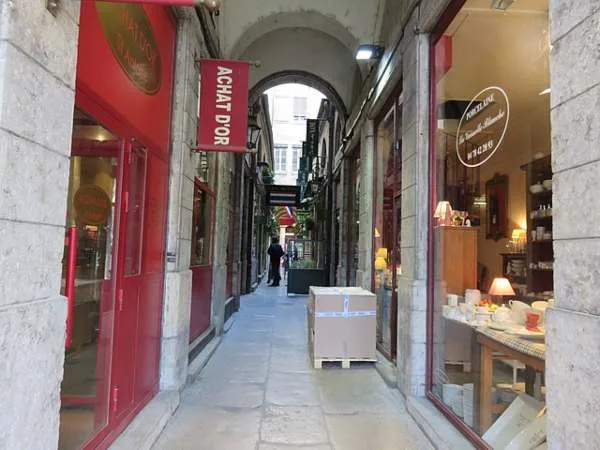
- Function : Named in honor of Lyon's flourishing book industry (15th-16th centuries). The printers (including the famous Étienne Dolet) used this shortcut to transport paper and distribute their works.
- To Observe: The passage itself, partially covered, is a journey through time that leads to the light of the platform.
➡️ The Courtyard Neighboring 27 Quai Saint-Antoine

- The Renaissance Jewel Box: Right next to the Passage des Imprimeurs is an entrance (often visible through the porch) leading to one of the most beautiful Renaissance courtyards on the Presqu'île.
- The Architectural Detail: If the courtyard is visible, look for the superimposed galleries and, potentially, a monumental staircase (spiral or open) which testifies to the luxury of the former private mansion.
In short, Rue Mercière is much more than just a shopping street; it is a symbol of Lyon's gastronomic, cultural and friendly identity, where the pleasures of the table blend with human warmth to offer a unique experience to visitors and residents.


