Welcome to Notre-Dame de Fourvière, an essential place of Lyon’s faith and devotion to the Virgin Mary.
History
In 1174, Olivier de Chavannes had a first chapel dedicated to the Virgin built on this hill, followed by a second dedicated to Saint Thomas Becket. However, these chapels were destroyed in 1562 during the Wars of Religion, and only a reconstruction at the end of the 16th century would bring the sanctuary back to life. In the middle of the 19th century, the church of Fourvière was in danger of falling into ruin.
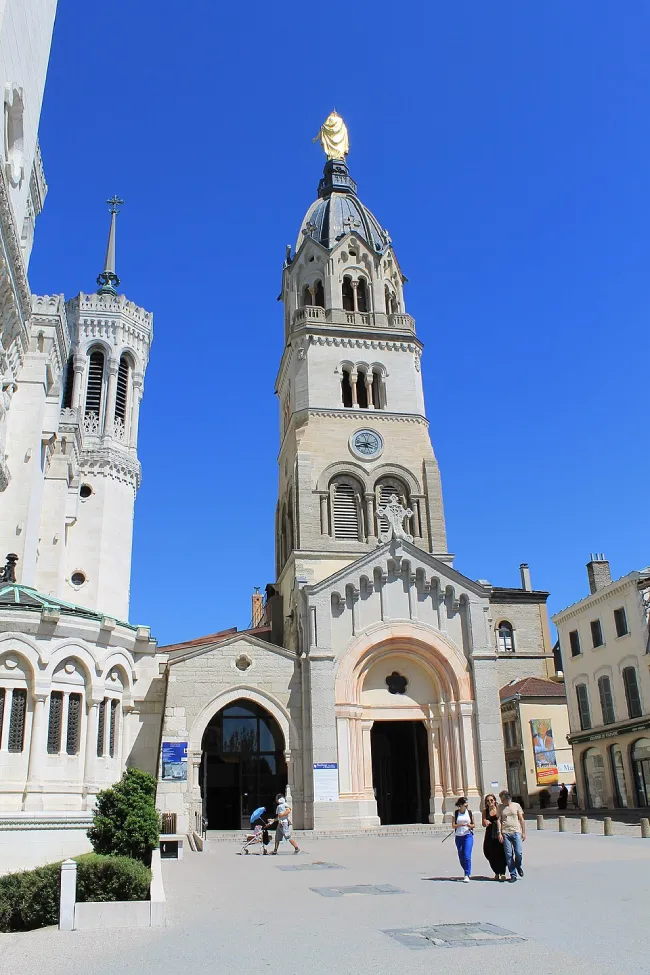
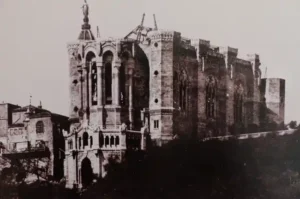
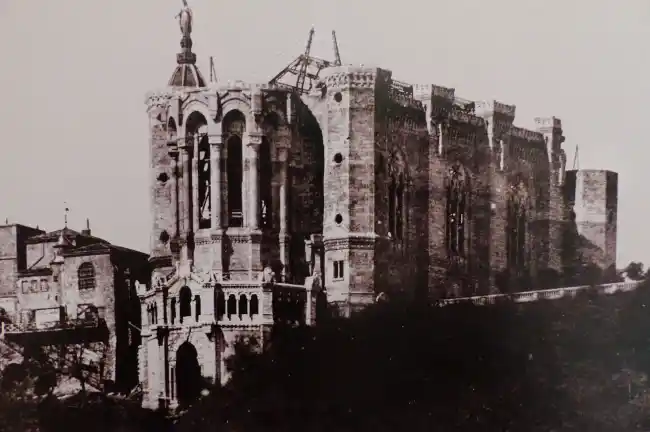
Alphonse-Constance Duboys was commissioned to restore the Saint-Thomas chapel and build the bell tower of this old church. The bell tower, crowned by the statue of the Virgin sculpted by Fabisch, was inaugurated on December 8, 1852, marking the first Festival of Lights in Lyon.
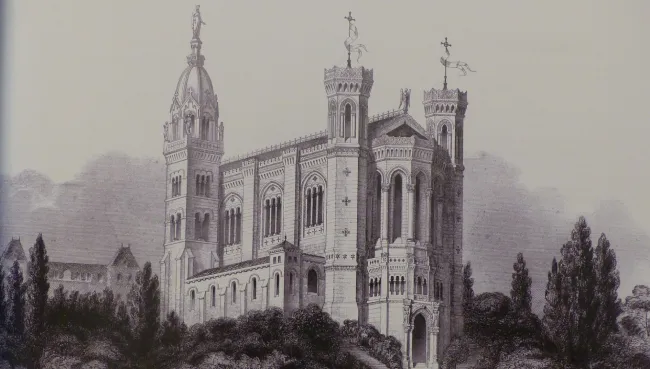
Faced with the growing influx of pilgrims in the mid-19th century, Archbishop Louis-Jacques-Maurice de Bonald founded the Fourvière Commission in 1850 and planned the creation of a new church. In 1853, Pierre Bossan, a renowned architect in religious architecture, took charge of this project. He designed ambitious plans for a basilica, which were approved despite reservations.
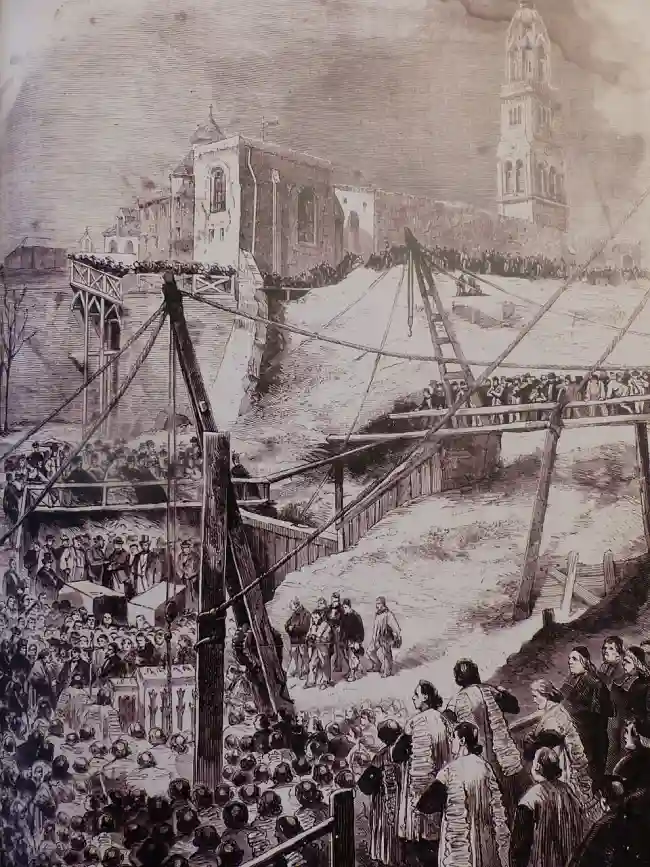
The first stone of the basilica, blessed by Pope Pius 9 in 1869, was laid on November 8, 1872. Work on the basilica was completed in 1896, when it was consecrated as a church on June 16. On March 16, 1897, Pope Leo XIII elevated Notre-Dame de Fourvière to the rank of minor basilica.
Architecture
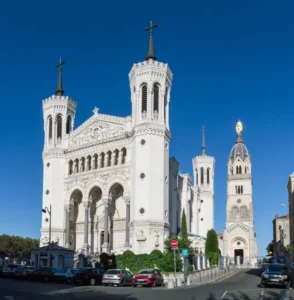
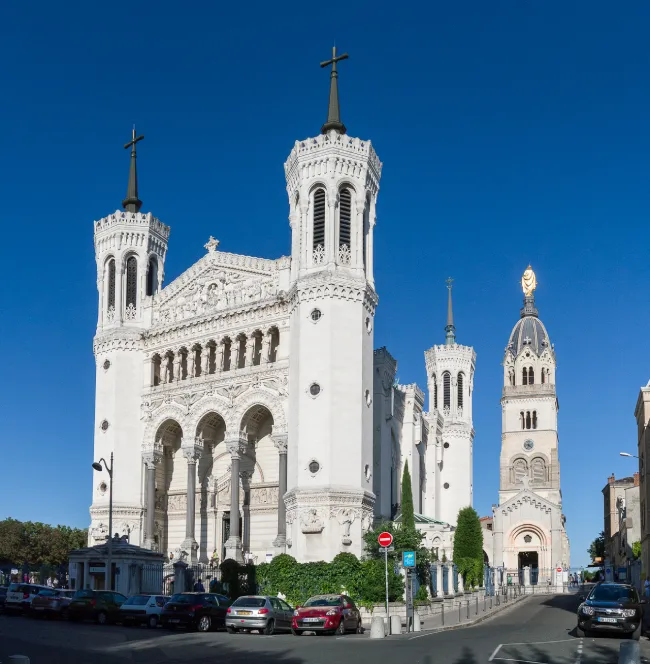
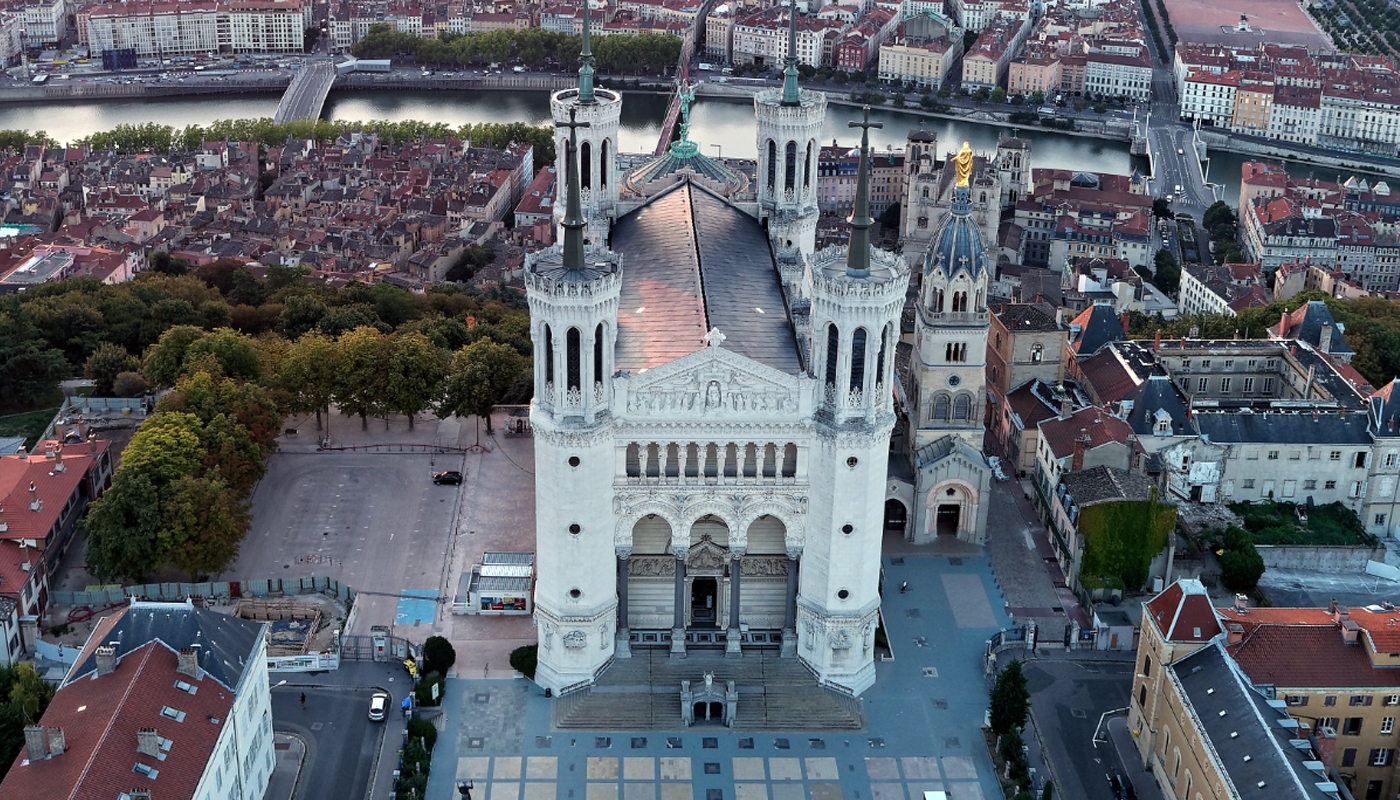
The Basilica of Notre-Dame de Fourvière stands out as an emblematic jewel of Lyon. Its elegant structure, combining Byzantine, Gothic and Romanesque styles, demonstrates exceptional architectural audacity. Its four 48-metre-high towers symbolise the cardinal virtues: Prudence and Temperance face the city of Lyon, while Fortitude and Justice proudly dominate the forecourt, giving the building a strong and protective symbolic character.
The high church
Inside, two superimposed churches reveal a sumptuous decor. In the upper church, six stained glass windows by Georges Décote illuminate a space where Carrara marble, Italian granite and gold shards blend. The gaze also falls on the altar, where the Virgin Mary, sculpted by Millefaut, frees Adam and Eve from the shackles of hell. The walls are decorated with monumental mosaics illustrating Mary's ties with the Church and France. The eight chapels, dedicated to the life of Mary, house works by artists such as Larrivé and Puech. The staircase of Wisdom, a masterpiece of red marble, leads to the upper church, overlooked by the statue of Wisdom by Dufraine which welcomes visitors.
The lower church
The lower church, which is the crypt of Fourvière, is dedicated to Saint Joseph and has the same surface area as the basilica above. The altar, dedicated to Saint Joseph, is decorated with his statue carrying the infant Jesus and a sculpted group representing his death. At the foot of the statue, a mosaic of the “seven deadly sins” opens a symbolic axis of the victory of good over evil.