Lyon City Hall: A History of Relocations

Lyon's City Hall has moved several times throughout its history. One of the city's symbols, Lyon's City Hall has been located in various places before settling in its current location.

Saint-Jacquême or Saint-Jacques Chapel

In ancient times and up until the 15th century in Lyon's history, the city's affairs were conducted in various locations, such as the homes of prominent citizens or in the Saint-Jacquême chapel (destroyed in 1792) located opposite the Saint-Nizier church. It was here, therefore, that the councilors met.

Cheese Street

The house, acquired by the consulate in 1424 to hold its assemblies, was not occupied until 1462 due to the archbishop's opposition. Work was carried out at that time, and the current buildings likely date from this period. In 1513, a fire damaged the archives and the upper hall, but repairs were completed a month later. In 1576, master mason Pierre Fontanel made alterations, possibly related to the removal of the galleries and the construction of the main staircase. In 1604, two neighboring houses were incorporated, but the consulate vacated the premises.

Poulaillerie Street (printing museum)

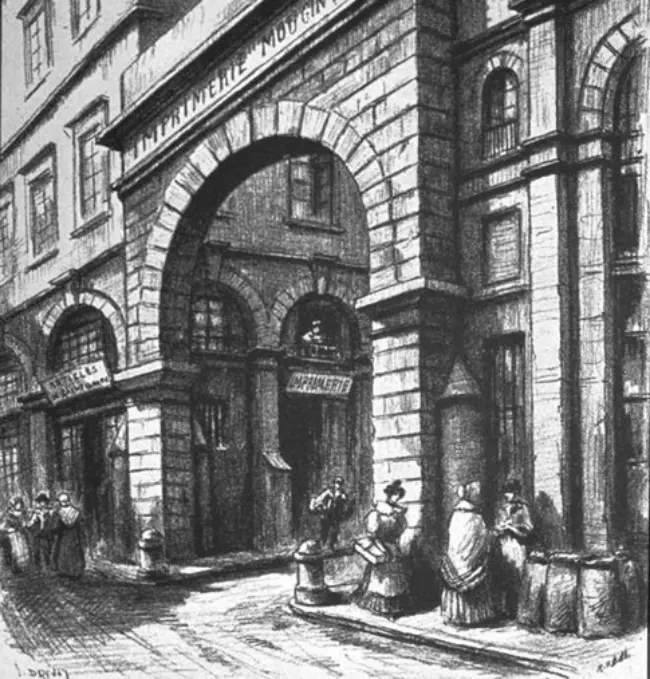
The town hall moved to the Hôtel de la Couronne. Indeed, the provost of the merchants, comparable to a contemporary mayor, and the aldermen, equivalent to today's municipal councillors, acquired the property in 1604 with the aim of establishing the Town Hall there.

Place of the soils

The building was constructed between 1646 and 1672 by the city architect, Simon Maupin. Place des Terreaux then became the administrative center of Lyon. The building is organized around two courtyards, one of which is raised, and four corner pavilions with a belfry enclosing the main courtyard. The richly decorated interior makes it a model of interior design. The town hall was partially destroyed by fire in 1674. The king commissioned Jules Hardouin-Mansart to design the plans for the new town hall. During the French Revolution, the consulate hall was transformed into a revolutionary tribunal. In 1792, the paintings depicting the aldermen and the provosts of the merchants were destroyed by the new municipal government, which wished to erase all traces of the old consulate. On July 14, 1803, a second fire destroyed the building, which was completely renovated during the Second Empire.
Share this article:

Related articles

This Headline Grabs Visitors' Attention

A short description introducing your business and the services to visitors.
en_GB

Pierre Bossan

Lorem ipsum dolor sit amet, consectetur adipiscing elit. Ut elit tellus, luctus nec ullamcorper mattis, pulvinar dapibus leo.